
Key Ingredients & Why Each One Matters
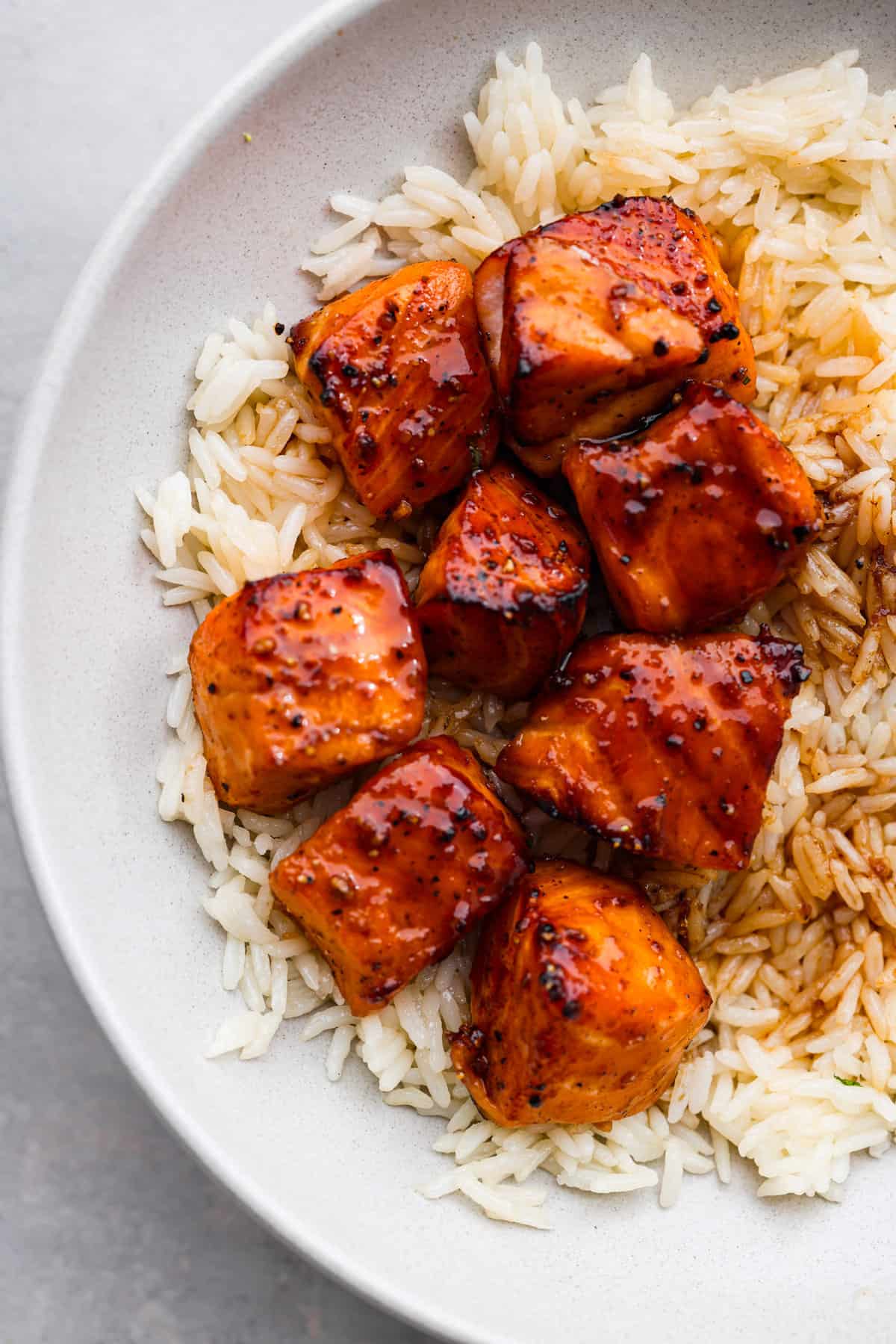
Salmon Filet: Choose a skinless filet with consistent thickness so the one-inch cubes cook evenly; look for firm, bright pink flesh with no dark spots or strong fishy smell. The delicate fat content keeps the salmon tender during the high-heat air fry while absorbing the glaze.
Soy Sauce: This is your umami backbone, delivering deep savory notes that balance the honey’s sweetness and anchor the entire glaze. Use it straight from a standard bottle as it’s the primary liquid in the marinade.
Honey: The counterpoint to soy sauce’s saltiness, honey adds subtle caramelization and glossy texture to the glaze when exposed to air fryer heat. Measure it carefully; too little and the glaze won’t set, too much and it may burn.
Garlic Cloves: Fresh minced garlic releases volatile aromatics that punch through the sweetness and salt, creating complexity in just three cloves. Mince them fine so they distribute evenly throughout the marinade and adhere to each salmon bite.
White Rice: Cooked white rice serves as a neutral, slightly sweet bed that lets the glazed salmon shine without competing flavors. Prepare it ahead or use leftover rice to save time on a busy weeknight.
Broccoli Florets: These cooked florets add earthy contrast and textural crunch to balance the tender, glazed salmon and creamy rice. Their mild flavor won’t overshadow the soy-honey glaze.
Shredded Carrots: Cooked carrots bring subtle natural sweetness and bright color to the bowl, complementing the umami depth without muddying the dish’s flavor profile.
Green Onion: Fresh sliced green onion adds a sharp, oniony bite that cuts through richness and brightens each bite just before you eat it.
Sesame Seeds: These tiny seeds provide nutty texture and visual appeal as a final garnish, grounding the dish with toasted depth.
Salt and Pepper: Use these to season the raw salmon cubes before marinating, allowing them to penetrate the fish’s surface.
Essential Kitchen Tools You Will Need
Air fryer: Your primary cooking vessel; a basket capacity of 4–6 quarts works for this recipe without requiring multiple batches.
Medium-sized bowl: For whisking the soy sauce, honey, and garlic marinade together smoothly.
Instant-read thermometer: Essential for confirming the salmon’s internal temperature reaches 125–130°F without guessing.
Cutting board and sharp knife: For cubing the salmon filet into uniform one-inch pieces.
Step-by-Step Instructions
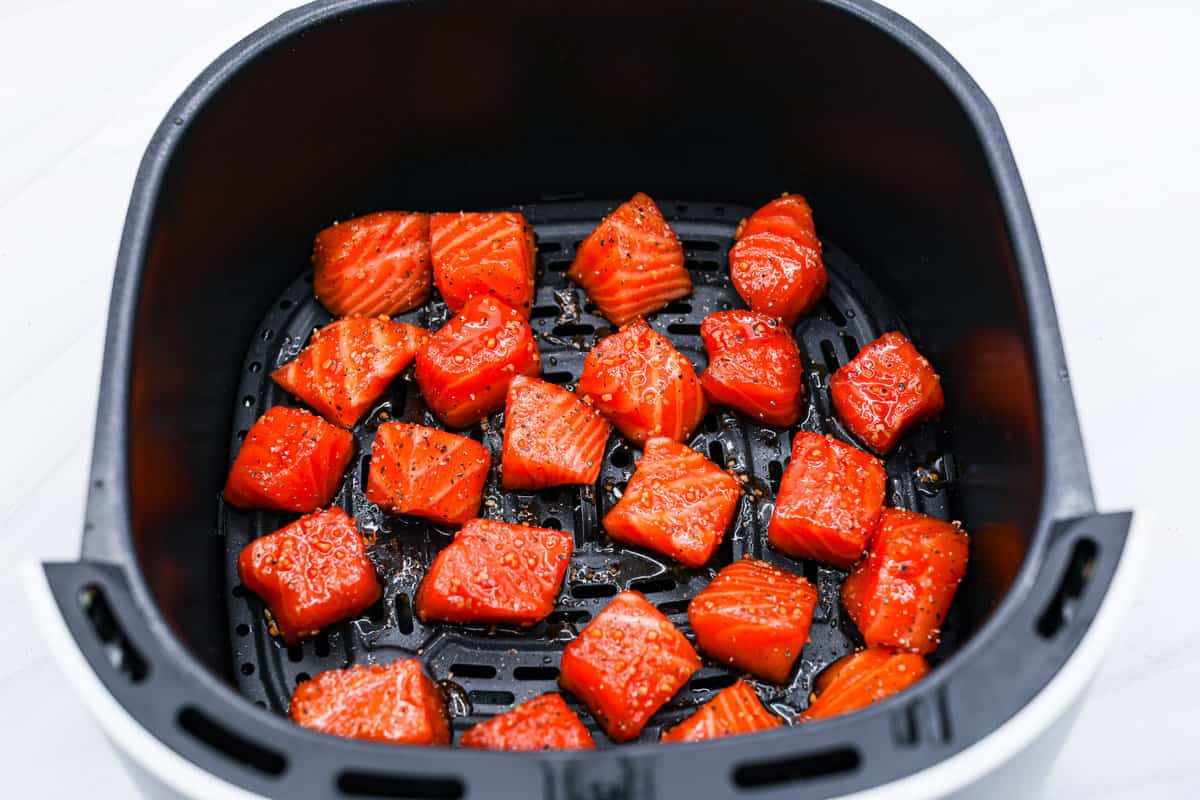
Before you start, make sure your air fryer is clean and ready to go—you may need to cook the salmon in batches depending on your basket size, so having everything prepped will keep the momentum going.
1. Cube the Salmon:
Cut your 1-pound skinless salmon filet into one-inch cubes and season each piece generously with salt and pepper. Uniform sizing ensures even cooking throughout the air fryer.
2. Build the Glaze:
In a medium bowl, whisk together ½ cup soy sauce, ⅓ cup honey, and 3 minced garlic cloves until the mixture is smooth and well combined. Before you add the salmon, carefully measure out and reserve exactly 2 tablespoons of this glaze in a small bowl—this reserved portion is your secret to perfect caramelization and prevents the full batch from burning.
3. Marinate the Salmon:
Add the cubed salmon to the remaining glaze in the bowl and toss gently to coat every piece. Let it sit for 15 minutes at room temperature—this gives the soy sauce and garlic time to penetrate the fish and develop flavor.
4. Air Fry the First Stage:
Arrange the marinated salmon bites in a single layer in your air fryer basket. If your basket is small, work in batches rather than crowding; crowding traps steam and prevents that crispy exterior. Set the temperature to 390°F and cook for exactly 3 minutes.
5. Brush and Glaze:
Open the air fryer basket carefully and use a pastry brush or small spoon to coat each salmon bite with the 2 tablespoons of reserved glaze you set aside earlier. This second application creates a glossy, caramelized layer without risk of burning.
6. Final Cook:
Close the basket and cook for another 3 minutes at 390°F. The salmon is done when the internal temperature reaches 125–130°F at the center of the largest cube—use an instant-read thermometer to check. The exterior should look golden and slightly caramelized, with the glaze adhering in a glossy coat.
7. Rest and Serve:
Remove the salmon bites from the air fryer and let them cool for 1 minute before serving. This brief rest allows the glaze to set completely and the fish to retain its moisture.
Chef Pro Tips for Foolproof Results
Cut salmon into uniform one-inch cubes. This is non-negotiable. Uneven pieces mean the smaller bites overcook while larger chunks stay raw inside. I use a sharp chef’s knife and work on a clean cutting board, measuring by eye after the first cube to keep them consistent. Uniform size guarantees every piece hits that perfect 125–130°F internal temperature at the same time.
Don’t skip the 15-minute marinade. I know it feels like an extra step, but this soak lets the soy sauce and garlic penetrate the salmon filet’s texture. Without it, you’re left with surface flavor only. Set a timer and use this window to prep your rice, broccoli, and carrots so the whole meal comes together seamlessly.
Reserve exactly 2 tablespoons of marinade before adding salmon. This isn’t a rough estimate—I measure it out in a small dish and set it aside immediately. This reserved glaze becomes your second-stage weapon at the 3-minute mark, creating that glossy caramelization that makes the dish restaurant-quality. Brush it on generously.
Check your air fryer’s hot spots. Not all air fryers heat evenly. If you notice one corner browning faster than the other, rotate the basket halfway through the first cook (before you open it at 3 minutes). This prevents uneven caramelization and ensures consistent doneness across batches.
Cook in a single layer, batch if needed. Crowding the basket traps steam and prevents that crispy exterior glaze from forming. I’d rather run two batches than sacrifice texture.
Common Mistakes to Avoid
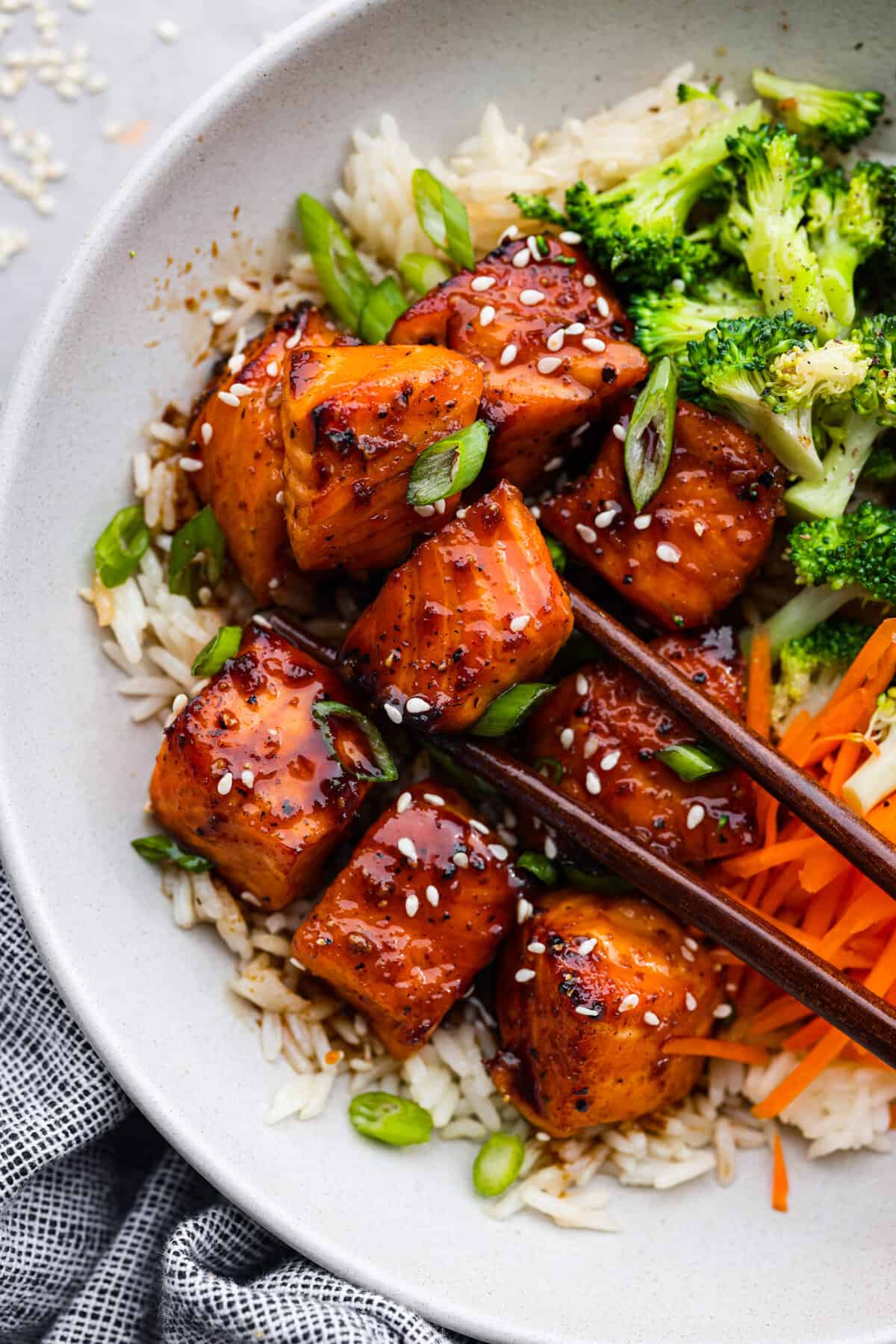
Overcooking the salmon. Salmon continues cooking from carryover heat after you remove it from the air fryer. I check the internal temperature at exactly 6 minutes—aiming for 125–130°F—and pull it out immediately. If you wait for 135°F on the thermometer, you’ll end up with dry, flaky salmon instead of that buttery interior.
Brushing the glaze on too early. Some home cooks brush the reserved marinade at the 1-minute mark hoping for extra caramelization, but this causes the honey to burn before the salmon’s exterior sets. Wait until the 3-minute checkpoint, right before the second stage of cooking.
Skipping the soy sauce drizzle at the end. The recipe works beautifully on its own, but that final hit of umami from an extra drizzle of soy sauce at serving time ties the whole bowl together and prevents the meal from tasting one-dimensional. It’s a small touch with outsized impact.
Make-Ahead Timeline & Storage Guide
How Far Ahead Can You Prep This?
The beauty of this recipe is how much you can do in advance without sacrificing that crispy-outside, buttery-inside texture. Up to 24 hours before cooking, you can cube your salmon, whisk together the soy sauce, honey, and minced garlic, and even marinate the fish. Just keep the marinade in the refrigerator in a covered bowl, and you’re golden—literally all you’ll need to do on dinner night is air fry and assemble.
If you want to prep even further out, cook your rice, broccoli, and carrots up to 3 days ahead. Store each component separately in airtight containers so they stay fresh and don’t absorb flavors from one another. This turns your weeknight into a simple assembly line: air fry the salmon, warm your vegetables if you like, and plate.
Fridge Storage, Freezing & Reheating
Leftover salmon bites keep beautifully in an airtight container in the refrigerator for up to 3 days. The glaze will firm up as it cools, which is exactly what you want—it protects the delicate fish and locks in moisture.
To reheat, place your bites on a baking sheet and warm them gently in a 300°F oven for about 5 minutes. This low-and-slow approach preserves the caramelized exterior without drying out the salmon. Avoid the microwave, which can turn that glossy glaze rubbery. For longer storage, freeze the cooked bites in a single layer on a parchment-lined tray, then transfer to a freezer bag for up to 2 months. Thaw overnight in the refrigerator before reheating.
Serving Ideas & Holiday Pairings
I plate these salmon bites the way I’d serve them at a dinner party: start with ½ cup of fluffy white rice as your base, then arrange the warm salmon cubes on top so they’re front and center. The cooked carrots and broccoli florets nestle around the rice, creating natural color contrast and structure on the plate. A handful of sliced green onion scattered across everything adds brightness and a fresh bite that cuts through the honey-garlic richness. The final step—that sprinkle of sesame seeds—isn’t just garnish; it’s textural payoff and a visual signal that this is something special.
This dish shines as a weeknight family dinner, but I also serve it at casual entertaining because it looks restaurant-polished without requiring any last-minute plating stress. The warm glaze and tender salmon stay perfectly intact when plated ahead, and the components hold their temperature beautifully for 10–15 minutes while guests settle in. For gifting or sharing, I pack cooled salmon bites separately from the rice and vegetables in an airtight container, then include a note about gentle reheating so the recipient gets the same glossy finish you worked for.
Simple ways to improve the presentation:
Drizzle a few extra teaspoons of soy sauce around the plate’s edge for depth and professional plating
Arrange salmon bites in a small mound rather than scattered, so each one catches the light
Toast the sesame seeds lightly beforehand to deepen their nutty aroma and crunch
Serve with a small bowl of extra soy sauce on the side for anyone who wants to customize their glaze
Frequently Asked Questions
Can I double this recipe for a crowd?
Absolutely. Simply double all ingredients and cook in batches in your air fryer, keeping the first batch warm on a sheet pan in a 200°F oven while you finish the second. The 15-minute marinade time and 6-minute cook time per batch remain the same.
Can I make this ahead of time?
Yes. Marinate the salmon cubes for up to 8 hours in the refrigerator, then cook when you’re ready. Cooked salmon bites last up to 3 days refrigerated in an airtight container.
How do I know when the salmon is done?
The internal temperature should reach 125–130°F, which you can verify with an instant-read thermometer. The exterior will be golden and caramelized from the glaze.
What if my air fryer cooks hotter than average?
Start checking doneness at the 5-minute mark (after the initial 3 minutes plus the glaze brush). Every air fryer runs slightly differently, so a quick temperature check prevents overcooking.
Can I use frozen salmon for this recipe?
Thaw salmon completely before cutting into cubes. Frozen-to-cooked salmon may not cook evenly in the 6-minute window and could affect your internal temperature target.
Honey Garlic Glazed Salmon Bites
Ingredients
Method
- Cut 1 pound skinless salmon filet into one-inch cubes and season with salt and pepper.
- In a medium-sized bowl, add 1/2 cup soy sauce, 1/3 cup honey, and 3 garlic cloves. Whisk together until smooth. Reserve 2 tablespoons of marinade to brush on the salmon during the cooking process.
- Add the salmon to the remaining marinade and toss to coat. Marinate for 15 minutes.
- Place the marinated salmon bites in a single layer into the air fryer. You may need to cook a couple of batches depending on the size of your air fryer. Cook at 390 degrees Fahrenheit for 3 minutes.
- Open the air fryer and brush the reserved glaze on the salmon bites. Close the basket and cook for an additional 3 minutes. The internal temperature for salmon should be 125-130 degrees Fahrenheit.
- Enjoy the salmon over ½ cup of the 2 cups white rice with some of the 1 cup shredded carrots, cooked 2 cups broccoli florets, and 1/4 cup green onion.
- Garnish with sesame seeds and a drizzle of additional soy sauce if desired.